
Last updated October 31, 2026
 Smart locks
 House lockouts
 Re-keying
 Deadbolt upgrades
 Schlage
 Kwikset
 Car keys & fobs
Non-destructive entry first, always - and we re-key Schlage, Kwikset, and Baldwin locks on the spot while you watch
You get a price before we start. It does not change when we arrive. No surprises.
Get your free estimateChoosing the Right Locksmith Brand: A Buyer’s Guide for San Francisco
Walk down the hardware aisle of any big-box store in San Francisco and you’ll see the same two names on nearly every box: Schlage and Kwikset. What the shelf labels won’t tell you is that the lock you’re holding was designed for a national market, not for a 1908 Edwardian flat in the Mission or a ground-floor condo off Divisadero. This guide breaks down what actually matters when selecting a lock brand in San Francisco: burglary patterns by neighborhood, aging door frame construction, salt air corrosion, and which brands genuinely resist the attack methods thieves in this city actually use.
Quick Answer
The right lock brand for a San Francisco home depends on your neighborhood’s break-in risk and your door’s construction. Most rental units and interior doors are fine with a quality Schlage, but homes in higher-burglary neighborhoods like SoMa, the Tenderloin, and parts of the Mission justify the step up to pick-resistant and drill-resistant high-security cylinders from Medeco, Mul-T-Lock, or Abloy. Pair any brand choice with a reinforced strike plate, because even a $200 lock fails fast on a soft Victorian door frame.
Styles & brands we work with
Table of Contents
- Why Lock Brand Actually Matters in San Francisco
- The Three Tiers of Lock Brands: Entry-Level, Mid-Tier, and High-Security
- Matching Brands to San Francisco Neighborhood Crime Patterns
- The Victorian Door Frame Problem: Why Hardware Alone Isn’t Enough
- Smart Locks in San Francisco: What to Actually Evaluate
- Why Multi-Brand Mastery in a Locksmith Matters More Than You’d Think
- Brand Profiles: Schlage, Kwikset, Baldwin, Medeco, Mul-T-Lock, Abloy
- Common Mistakes to Avoid
- When to Call a Professional
- Frequently Asked Questions
Why Lock Brand Actually Matters in San Francisco
Locks look the same from the outside. A deadbolt is a deadbolt, right? Not remotely. The difference between a $25 Kwikset and a $140 Medeco is what happens when someone with a bump key, a pick gun, or a cordless drill shows up at your door at 3 a.m. Entry-level locks from any brand are built to a price point, with looser tolerances and brass pins that wear quickly. High-security brands machine their cylinders with hardened steel inserts, sidebars, and key control systems designed specifically to defeat the attack methods that dominate residential burglaries in San Francisco.
In our experience servicing doors across the city, the bulk of forced entries we see aren’t sophisticated. They’re kick-ins on doors where the deadbolt held fine but the strike plate tore out of a soft old jamb. The second most common is a quick drill attack through the cylinder, which takes under 60 seconds on most entry-level hardware. A brand matters because some brands have answered these specific threats and others haven’t. The best lock in the world won’t stop a determined intruder forever, but it buys time, makes noise, and forces a thief to move on. In a dense city like San Francisco, where a neighbor is always within earshot, those extra 30 seconds are often the difference between a failed attempt and a ransacked apartment.
San Francisco’s rental turnover also creates a unique condition. Landlords typically install whatever is cheapest at the hardware store, meaning apartment buildings across the city share nearly identical, easily defeatable hardware. If your building’s front door has a Kwikset or basic Schlage that’s been there since 2005, every unit in that building has a documented weak point. We see this pattern constantly: a building manager in the Richmond District upgrades one unit after a break-in, and the other eleven units still have the original hardware. Brand selection starts with knowing what’s on your door right now and whether it was selected for security or for price.
The Three Tiers of Lock Brands: Entry-Level, Mid-Tier, and High-Security
Lock brands fall cleanly into three tiers, and the tier you need depends less on your budget than on your threat profile. Here’s the honest breakdown.
Tier 1: Entry-Level Brands (Kwikset, Schlage B-Series)
Kwikset and the Schlage B-series line dominate residential hardware stores because they’re affordable, widely available, and easy to install. A typical Kwikset deadbolt retails between $20 and $40. A Schlage B60 costs roughly $30 to $50. Both will stop a casual bump-and-pry attempt from an amateur. Neither will hold up to a targeted attack for more than 30 seconds. The primary weakness is cylinder construction: these locks use standard pin tumblers without hardened inserts, which means a drill bit at the sheer line disables them fast. They also lack key control, meaning anyone with access to a key can make copies without restriction.
For a San Francisco renter who wants to swap out the landlord’s worn lock or secure an interior door, entry-level isn’t an automatic mistake. A fresh Schlage B60 on a properly reinforced frame is far better than a 15-year-old worn cylinder from any brand. But if you live on a ground floor in a higher-crime ZIP code, or if your door faces an alley or unlit driveway, this tier should be considered temporary while you budget for an upgrade.
Tier 2: Mid-Tier Brands (Baldwin, Schlage Commercial, Yale)
Baldwin occupies an interesting position in the lock world. The brand is known for premium aesthetic finishes and heavy, satisfying mechanical action, but not every Baldwin lock carries the grade certification you’d expect at its price point. Baldwin’s higher lines offer solid brass construction and much better tolerances than entry-level Schlage, but their cylinders still use standard pin systems unless you specify an upgrade. Yale lands similarly: excellent build quality, strong brand heritage, and a range of products from basic deadbolts to commercial-grade mortise locks.
The mid-tier makes the most sense for San Francisco homeowners in lower-crime neighborhoods who genuinely care about door hardware quality. A Baldwin mortise lock on a well-fit front door in Presidio Heights isn’t a security risk, and it looks dramatically better than anything in the entry-level tier. This tier also covers Schlage commercial lines, which do carry ANSI Grade 1 ratings at a price that still undercuts true high-security brands. If your budget allows for a $100 to $200 deadbolt but not a $250 to $400 Medeco, this is where you land.
Tier 3: High-Security Brands (Medeco, Mul-T-Lock, Abloy)
This is the tier where physical security actually gets serious. Medeco, Mul-T-Lock, and Abloy have each spent decades engineering cylinder systems that resist picking, bumping, and drilling by design. Medeco’s cylinders add a sidebar mechanism that resists both picking and bumping. Mul-T-Lock uses a telescoping pin design that defeats standard pick tools entirely, plus drill-resistant steel inserts. Abloy builds disc-detainer cylinders that are functionally unpickable at the residential threat level and essentially drill-proof without hours of work and specialized tooling.
What separates this tier isn’t just the cylinder: it’s key control. Medeco, Mul-T-Lock, and Abloy all operate restricted key systems. You can’t walk into a hardware store and get a duplicate cut. Each key is tied to a registered owner, and blanks are only released to authorized dealers. For a San Francisco homeowner who’s ever had a landlord, an ex-roommate, or a anonymous contractor copy a key, that difference isn’t a luxury, it’s the entire point. In city terms: if your key has ever passed through a mechanic’s hand in South San Francisco or a dog walker’s keychain in Noe Valley, you’ve lost track of who holds copies. Key control closes that hole permanently.
Abloy deserves a specific mention. The Finnish brand made its name on padlocks and high-traffic commercial applications, but their Protec2 deadbolt is one of the most physically resistant consumer locks on the market. For a San Francisco homeowner who genuinely wants maximum resistance and doesn’t care about key compatibility with existing doors, it’s a strong choice. The trade-off is price and the need to work with a locksmith who actually stocks and services the line.
Matching Brands to San Francisco Neighborhood Crime Patterns
San Francisco’s geography concentrates property crime unevenly, and any honest brand recommendation has to start there. Police district data consistently shows higher rates of burglary and property crime concentrated in the central and eastern neighborhoods. SoMa, the Tenderloin, the Mission, Bayview, and parts of the Western Addition consistently report residential break-in rates well above the city average. The Outer Sunset, Outer Richmond, and Sea Cliff generally report lower rates. This isn’t a statement about any neighborhood’s character. It’s a statement about where property crime clusters in San Francisco, and it should inform what you bolt to your door.
Here’s how we’d apply that data to lock-buying decisions:
- Higher-burglary neighborhoods (SoMa, Tenderloin, Mission, Bayview, parts of Western Addition): Budget for a high-security cylinder from Medeco, Mul-T-Lock, or Abloy, especially on ground-floor units and any door facing a street, alley, or unmonitored courtyard. Pair with a Grade 1 deadbolt and reinforced strike kit.
- Moderate-risk neighborhoods (Castro, Noe Valley, Inner Richmond, Glen Park, Bernal Heights): At minimum a mid-tier option: Schlage commercial-grade deadbolt or Baldwin. If budget allows, step to high-security for ground-floor and rear doors.
- Lower-risk neighborhoods (Outer Sunset, Sea Cliff, St. Francis Wood, Presidio Heights): A properly installed Schlage or Baldwin is generally sufficient, with judgment calls for ground-floor units and homes with ADUs or detached garages.
- Rental units citywide: Talk to your landlord before swapping hardware, but a high-security cylinder can often be installed and rekeyed without changing the landlord’s key entirely. Many San Francisco landlords will agree to a tenant-funded upgrade if you leave the cylinder when you move.
One additional consideration: San Francisco’s micro-climates affect hardware longevity differently. Homes in the fog belt (Outer Sunset, Outer Richmond, Sea Cliff) deal with constant moisture and salt air, which corrode cheaper internal components faster. A lock that works flawlessly in Potrero Hill might bind and stick after three years out by Ocean Beach. Mid-tier and high-security brands use better internal materials, and that matters more on the fog line than most people realize.
The Victorian Door Frame Problem: Why Hardware Alone Isn’t Enough
Here’s the thing nobody at the hardware store tells you about upgrading to high-security locks in San Francisco: most of the city’s housing stock was built before 1930, and the door frames reflect it. The typical Victorian or Edwardian front door in the Mission, the Haight, or the Western Addition has a jamb made from old-growth fir that has spent 80 to 120 years drying out and loosening up. The deadbolt might be brand new, but the strike plate is screwed into wood with the consistency of balsa and a screw depth of maybe three-quarters of an inch.
When a high-security lock fails on a San Francisco door, it almost never fails at the cylinder. It fails at the frame. A kick-in attack doesn’t need to defeat the lock mechanism at all: it just needs to blow the strike plate free of the jamb. That takes seconds on an unreinforced old frame, regardless of what lock brand you installed. We’ve seen $300 Medeco deadbolts sitting intact on the floor next to splintered door frames more times than we can count.
Here’s what actually needs to happen if you’re serious about security on an older San Francisco home:
- Evaluate the jamb condition first. If you can press a screwdriver tip into the jamb wood with moderate pressure and leave a visible mark, you have rot or extreme dryness. The frame needs attention before any lock upgrade.
- Install a reinforced strike plate with 3-inch screws. The standard strike plate is held by two half-inch screws that bite into the jamb face only. A security strike plate is heavier steel and accepts 3-inch screws that reach through the jamb and into the structural framing behind it.
- Consider a door edge wrap or full armor kit. These steel sleeves wrap around the door edge at the lock area, preventing the deadbolt from tearing through the door slab itself, which is the second most common failure after the strike plate.
- Check the door slab material. Many San Francisco apartments still have hollow-core or half-glass doors. No lock on a hollow-core door matters much. If the door itself is weak, budget for a solid-core replacement before spending on a high-security cylinder.
Bottom line: in a city where 40 percent of the housing stock predates 1940, the brand you choose is only half the equation. A $60 Schlage on a reinforced frame will often outperform a $300 Medeco on an unreinforced one. Our default advice for San Francisco homeowners is to treat the frame preparation as the non-negotiable step, then choose the best cylinder your budget allows.
Smart Locks in San Francisco: What to Actually Evaluate
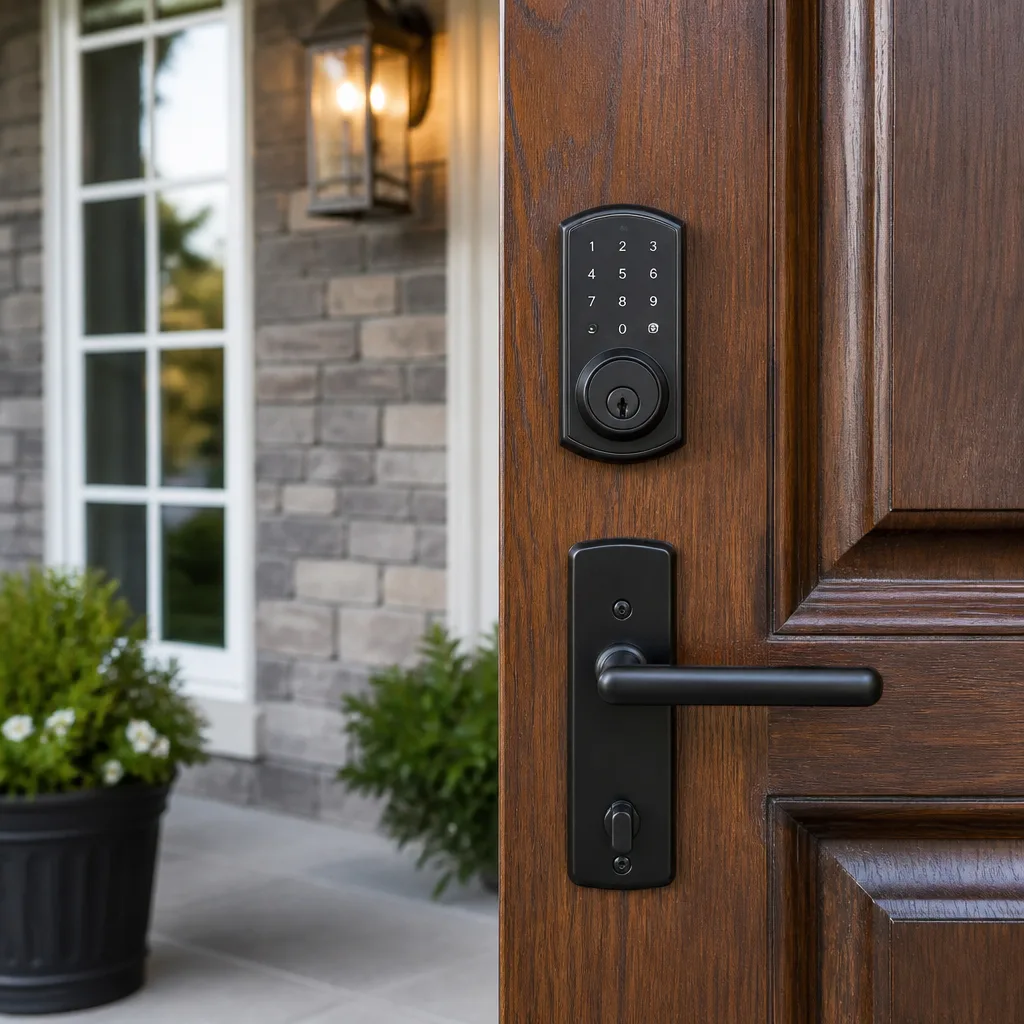
Smart locks have become the default choice for tech-inclined San Francisco homeowners, and the brand landscape here is different from the mechanical lock world. August, Schlage Encode, Yale Assure, Level, and a dozen Kickstarter brands compete for attention with Wi-Fi connectivity, app integrations, and keypad entry. The problem with evaluating smart locks by feature list alone is that they combine two categories of risk: physical security and digital security. A lock that opens with a beautiful app but has weak physical internals or a poorly secured wireless protocol is actually worse than a basic mechanical deadbolt.
Here are the evaluation criteria we use for San Francisco installations:
- Physical cylinder quality: Smart locks are only as physically secure as the cylinder inside them. A smart lock from August or Level built around a Kwikset-grade cylinder offers app convenience but entry-level physical resistance. A Schlage Encode built on the Schlage C-series or B-series platform inherits that brand’s physical build quality. This is why we lean toward smart locks from established mechanical lock brands rather than software startups.
- Encryption standards: Look for locks using AES-128 or AES-256 encryption on both the Bluetooth and Wi-Fi communication layers. Cheaper smart locks have shipped with unencrypted connections or easily intercepted Bluetooth pairing protocols. Ask the manufacturer directly if you can’t find the encryption spec on their site.
- California privacy law compliance: Smart locks that collect entry logs, user data, and network telemetry are subject to the California Consumer Privacy Act. Before buying, check the manufacturer’s privacy policy for data retention limits, third-party sharing agreements, and California-specific rights language. Several smart lock brands have privacy policies that would make a data-conscious San Franciscan uncomfortable.
- Local service availability: This matters more than people realize. A smart lock that fails in a locked position at 11 p.m. on a Tuesday is an emergency. If the brand has no service presence in San Francisco and relies entirely on mail-in warranty support, you’re sleeping on a couch. Choose a brand with established distribution and service in the Bay Area.
- Battery failure behavior: Every smart lock eventually dies. Good brands warn you with multiple low-battery alerts and retain mechanical key override. Poor brands lock you out. Ask about battery life and failover behavior before you buy.
Smart locks can absolutely be the right choice for a San Francisco home, especially for Airbnb hosts, busy families, or anyone managing frequent guest access. The mistake is treating them as automatically more secure than quality mechanical hardware. Evaluate the physical cylinder first, the digital security second, and the convenience features last.
Why Multi-Brand Mastery in a Locksmith Matters More Than You’d Think
Here’s a truth about the locksmith industry that rarely gets said out loud: most locksmiths stock one or two brands and recommend what they carry. If a shop’s entire inventory is Schlage, every conversation ends in Schlage. If they’re a Medeco dealer, every problem is a Medeco problem. The recommendation isn’t necessarily wrong, but it’s not independent. It’s a recommendation constrained by what’s on the shelf.
We work with eight brands across the full spectrum, from consumer lines like Kwikset and Schlage to high-security restricted systems like Medeco, Mul-T-Lock, and Abloy, plus architectural lines like Baldwin, Sargent, and Yale. That spread isn’t a marketing point. It changes the shape of the conversation. When we visit a San Francisco home with a 1927 door frame, a Schlage deadbolt, and a tenant turnover coming next month, we have the full brand universe to work with. Maybe the answer is a Medeco cylinder in the front door and rekeyed Schlage throughout. Maybe it’s an Abloy for the ground-floor unit and Baldwin for the upstairs. The point is that the recommendation comes from the door and the threat profile, not from what’s sitting in the van.
Certified competency across eight brands also means we’re fluent in the failure modes of each. We know what a 20-year-old Medeco cylinder sounds like when it’s wearing out. We know which Mul-T-Lock model has the finicky sidebar spring. We know when a Schlage B-series needs replacement versus when a simple rekey will do. In a city with San Francisco’s mix of building ages, that depth matters. A standard pickup-truck locksmith can swap a lock. The question is whether they can tell you honestly which lock you should have swapped it to.
For car owners, the same breadth applies. Car key replacement in Mountain View and across the Bay Area involves entirely different chip protocols, transponder systems, and keyway patterns depending on the make and model. A locksmith who only works residential doors can’t help you when a transponder key fails. One call covers your car, your home, and your emergency, and that breadth comes from the same multi-system fluency that matters in every part of the trade.
Brand Profiles: The San Francisco Buyer’s Cheat Sheet
Schlage: The Baseline, Done Well
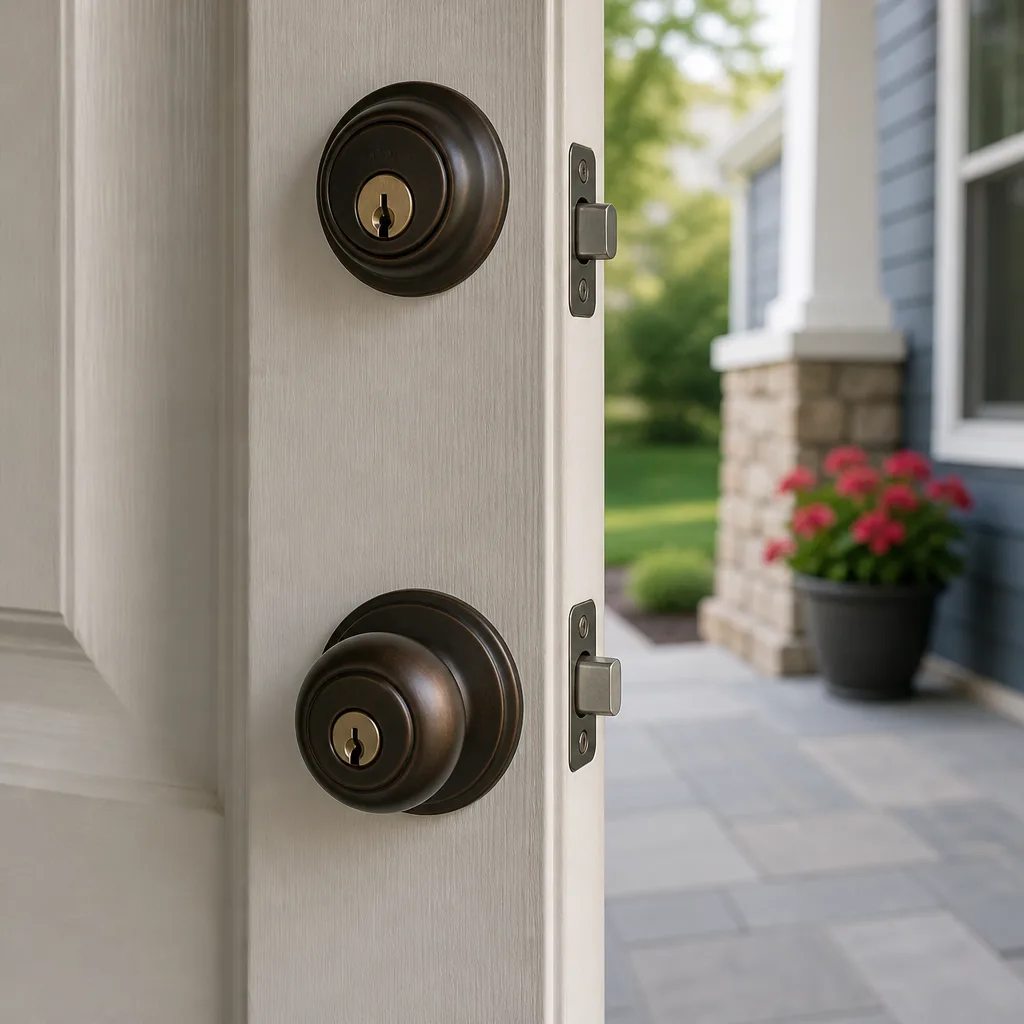
Schlage is the default recommendation for a reason: solid tolerances at a fair price, excellent dealer support, and wide availability across San Francisco hardware stores and locksmith shops. The B-series residential line is the entry point, the commercial lines carry Grade 1 ratings, and the brand holds up reasonably well against San Francisco’s fog and salt air. Schlage isn’t the most secure option on the market, but it’s rarely the wrong answer for an interior door or a lower-risk neighborhood. We recommend Schlage as the default starting point in most conversations, then adjust upward from there based on neighborhood and frame condition.
Kwikset: Fine for What It Is
Kwikset is the budget baseline. The brand’s SmartKey system lets homeowners rekey without a locksmith, which is genuinely useful for San Francisco renters who want to swap keys quickly between roommates. But SmartKey’s rekey mechanism has historically been weaker against forced entry than a standard pin cylinder, and Kwikset’s build quality sits at the entry-level tier. The right use case is a temporary fix, a low-risk interior door, or a situation where budget is the controlling factor and the alternative is no lock at all.
Baldwin: Premium Feel, Variable Security
Baldwin makes beautiful hardware. The weight, the finish, the action, all of it. San Francisco’s higher-end apartments and restored Victorians frequently spec Baldwin for aesthetic reasons, and we install a lot of it in Presidio Heights, Pacific Heights, and the Marina. The caveat: not every Baldwin model carries an ANSI Grade 1 rating. The premium lines are solid, but always check the grade on the specific model before assuming beauty equals security. For most Baldwin applications, we recommend upgrading the cylinder to a high-security option, which gives you the aesthetics of Baldwin with the attack resistance of Medeco or Mul-T-Lock.
Medeco: Key Control and Hardened Design
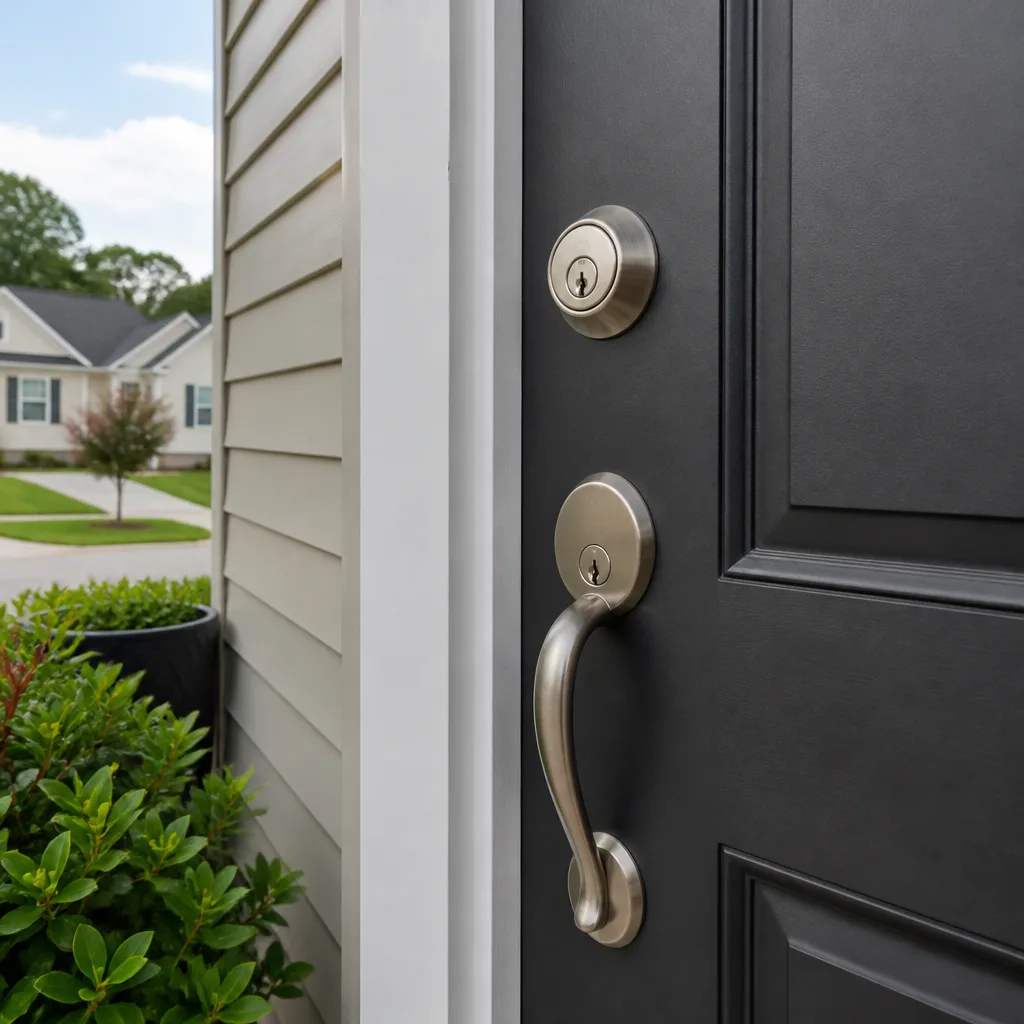
Medeco is one of the most recognized names in high-security residential hardware, and the reputation is earned. The sidebar mechanism resists picking and bumping far beyond standard cylinders, and the hardened steel inserts make drilling a slow, loud, frustrating job. The key control system means keys can only be duplicated through an authorized dealer with your registered signature on file. For San Francisco homeowners in higher-risk neighborhoods who want the proven standard, Medeco is the answer we most often recommend. The cost is real, usually $250 to $400 per cylinder installed, but you’re buying actual threat resistance, not a sticker.
Mul-T-Lock: The Pick-Resistant Specialist
Mul-T-Lock’s telescopic pin system is a genuinely different cylinder technology that defeats standard picking tools by design. The brand also offers interchangeable cores that make rekeying easy and drill-resistant inserts that slow down power tools. Mul-T-Lock has found a strong following in San Francisco apartment buildings and commercial storefronts where key turnover is high and the threat profile is elevated. For a landlord managing units in the Mission or SoMa, a Mul-T-Lock system with master keying and restricted duplication solves several problems at once. Property managers should understand how rekeying locks works in practice before committing to any restricted system.
Abloy: The Fortress Option
Abloy is the brand you choose when you want the physical attack to fail completely. The disc-detainer cylinder is pick-resistant at a level that exceeds any traditional pin cylinder, and the hardened construction resists drilling dramatically better than the entry-level brands. The trade-off is that Abloy’s system is proprietary, meaning you’ll always work with an Abloy-authorized dealer for keys and service. For a San Francisco homeowner who’s experienced a break-in and wants maximum resistance on the front door regardless of cost, Abloy is a serious option. We keep them in stock because certain customers specifically want this level of fortification.
Common Mistakes to Avoid
- Buying high-security hardware without reinforcing the door frame. This is the most common mistake in San Francisco’s old housing stock, and it turns a $300 lock into a decorative plate while the frame splinters on the first kick.
- Paying premium prices for entry-level cylinders in a smart lock wrapper. A $250 smart lock built on a $15 cylinder is a convenience device, not a security device. Check what’s physically inside the smart lock before you pay a premium for the app.
- Assuming landlord-installed hardware is adequate. Most San Francisco landlords spec the cheapest option at the hardware store and install it once, then never think about it again. That lock on your apartment door has likely been through five tenants and zero security reviews.
- Replacing hardware without rekeying the rest of the house. If you’ve lived in your San Francisco home for more than two years, you have no idea how many keys are floating around. Rekeying is the fastest way to take back control of who holds a key, and it costs far less than most people assume.
- Chasing the wrong threat model. Most San Francisco burglaries are either kick-ins or simple lock defeats, not sophisticated pick attacks. Prioritize frame reinforcement and a decent cylinder over exotic lock technology you’ll never actually need.
- Treating all locksmiths as interchangeable. A locksmith who stocks one brand will recommend one brand. Ask what brands a shop actually works with before taking their advice. Not all locksmiths speak Medeco or Abloy. We do, and it changes the recommendation.
- Ignoring salt air corrosion in the fog belt. If you live in the Outer Sunset or Outer Richmond, your lock is exposed to marine air most of the year. Cheap internal components corrode. Buy hardware that’s built for the conditions.
When to Call a Professional
Lock brand selection is a decision you can make on your own with the information in this guide. Installation and security assessment often aren’t. If you’re dealing with an older San Francisco home, if you’ve experienced a break-in, if you’re not sure what lock is currently on your door, or if you want a restricted key system that actually works as designed, a professional evaluation is worth the hour. The right locksmith will look at your door, your frame, your neighborhood risk, and your key management, then make a recommendation from the full brand spectrum rather than from whatever’s in the truck. We’ve seen enough failed installations and mismatched hardware across San Francisco to know that the evaluation matters as much as the lock itself. Emergency locksmith service is available when security can’t wait, and our Citadel Locksmith home coverage spans residential, automotive, and urgent response calls. Citadel Locksmith offers free estimates in San Francisco, call (833) 589-8078.
Frequently Asked Questions
For most San Francisco apartments, a Schlage deadbolt is the right baseline, with a step up to Medeco or Mul-T-Lock if the unit is ground-floor in a higher-burglary neighborhood like SoMa or the Mission. The hardware matters less than the frame reinforcement, so ask your landlord about strike plate upgrades regardless of brand.
Expect to pay $25 to $50 for entry-level hardware, $100 to $200 for mid-tier brands like Baldwin or Schlage commercial, and $250 to $400 for high-security brands like Medeco or Abloy. Installation costs vary widely depending on whether frame reinforcement or door modification is needed. Call our team at (833) 589-8078 for a free estimate.
Not necessarily. Smart locks combine physical security and digital security, and many models from software-first brands use entry-level cylinders inside a premium price tag. Look for smart locks built on Schlage or Yale mechanical platforms with AES encryption and California privacy compliance. The physical cylinder inside matters as much as the app.
Entry-level Kwikset and Schlage cylinders are the most commonly defeated, simply because they’re the most common hardware on San Francisco doors. The attack method is usually bumping or drilling, not fine picking. High-security brands with sidebar mechanisms (Medeco, Mul-T-Lock) and disc-detainer designs (Abloy) resist those attacks at a fundamentally higher level.
Rekeying is possible as a DIY project with the right tools, but most people get better results from a professional rekey in under 30 minutes. The cost is modest, and a professional rekey also inspects the cylinder for wear, which matters on older San Francisco locks that have been in service for decades.
You need to evaluate three things: the condition of your door frame, the crime patterns in your specific San Francisco neighborhood, and who currently has keys to your home. Start with a physical evaluation of the frame, then choose a brand tier that matches your neighborhood’s risk profile. If you’re not sure, a professional locksmith can make the assessment for you. Call us at (833) 589-8078 to schedule a free estimate.
The Bottom Line
Lock brand selection in San Francisco isn’t a one-size-fits-all question. The right answer depends on your neighborhood, your door’s age and condition, who’s had keys to your home, and whether you care about key control. Entry-level brands have their place, mid-tier brands offer a sweet spot for many homeowners, and high-security options from Medeco, Mul-T-Lock, and Abloy deliver real, measurable resistance that the hardware store brands simply don’t. The single most important investment is usually frame reinforcement, not the fanciest cylinder. If you want independent guidance from a team that works across the full brand spectrum, we’re available for emergency calls and scheduled evaluations across San Francisco. Fortress-level security, neighborhood-level service. Call (833) 589-8078 for a free estimate, and learn how car key replacement fits into the full Citadel service picture if your key needs extend beyond the front door.
Written by the team at Citadel Locksmith, serving San Francisco since 2011.