

Last updated October 31, 2026
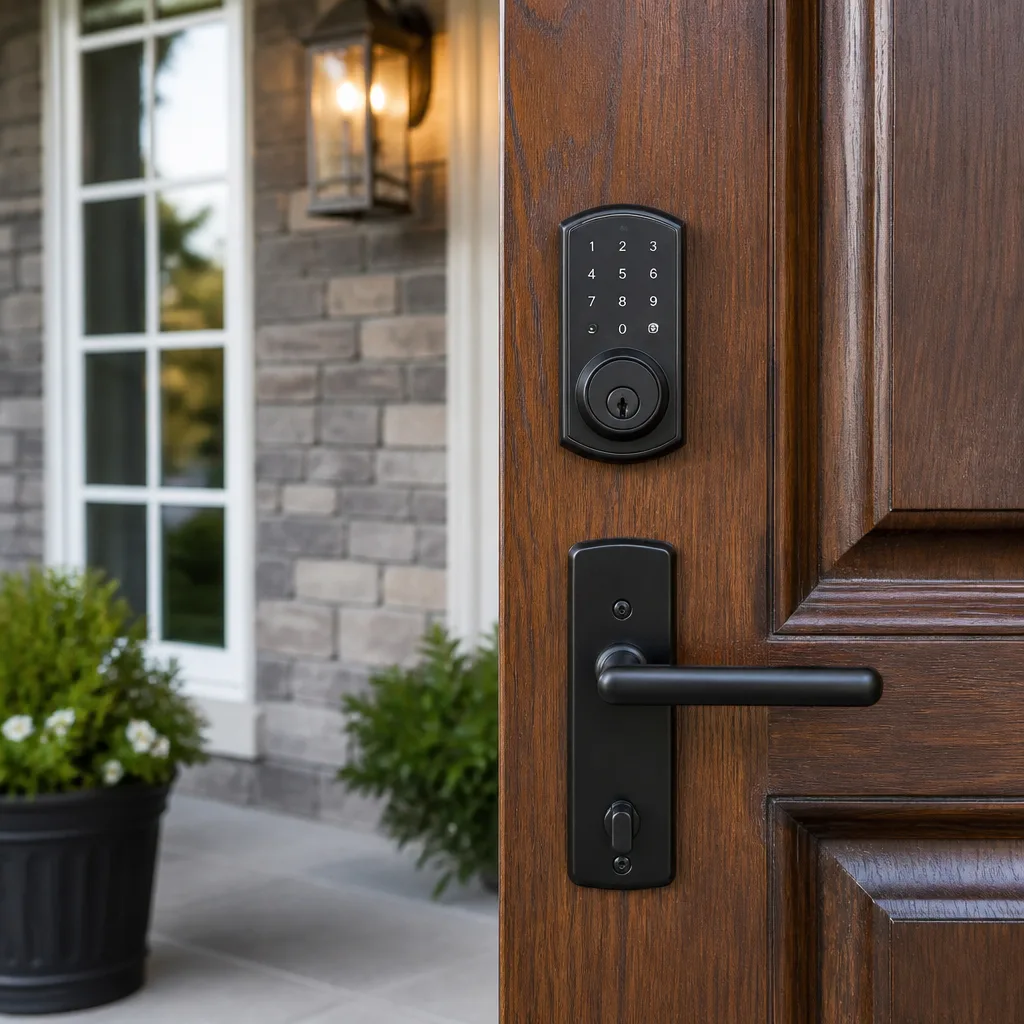 Smart locks
 House lockouts
 Re-keying
 Deadbolt upgrades
 Schlage
 Kwikset
 Car keys & fobs
Non-destructive entry first, always - and we re-key Schlage, Kwikset, and Baldwin locks on the spot while you watch
You get a price before we start. It does not change when we arrive. No surprises.
Get your free estimateLocksmith Emergency Preparedness Guide for San Francisco Homes
San Francisco residents are statistically more likely to be locked out of their home in any given year than to experience a power outage lasting more than four hours, yet earthquake kits are common and lockout plans are virtually nonexistent. Walk through any neighborhood in San Francisco, from the Richmond to the Mission, and you’ll find go-bags packed with first aid supplies and water purification tablets. What you won’t find is a household protocol for what happens when a deadbolt fails at 11pm, when a smart lock goes dark during a PG&E shutoff, or when seismic frame shift jams the front door from the inside. This guide builds a locksmith-specific emergency protocol from the ground up, giving you an access-continuity plan that works under every realistic failure scenario this city can throw at you.
By the time you finish reading, you’ll know exactly how to prevent most lock emergencies, how to respond when one happens anyway, and how to pre-vet a professional so the 3am lockout doesn’t end with a random Google search and a regretful invoice. For Locksmith Warning Signs: A San Francisco Homeowner’s Reference Guide, see our companion piece.
Styles & brands we work with
Quick Answer
Locksmith emergency preparedness for San Francisco homes means building an access-continuity plan before you need it: designate a trusted key holder, store a spare key securely off-site, pre-vet an emergency locksmith and save their number, test your physical key override on smart locks every quarter, and choose hardware that resists seismic frame shift. The households that handle lock emergencies best are the ones that made three or four simple decisions weeks or months before the crisis hit.
Table of Contents
- Why San Francisco Homes Need a Locksmith-Specific Emergency Plan
- Building Your Household Access-Continuity Plan
- Earthquake-Specific Lock Failure: What SF Homeowners Need to Know
- Smart Lock Failure During Power and Internet Outages
- How to Pre-Vet and Save an Emergency Locksmith Contact
- Multi-Resident Household Protocols: Authority and Documentation
- Spare Key Storage: What Actually Works in San Francisco
- Common Mistakes to Avoid
- When to Call a Professional
- Frequently Asked Questions
- The Bottom Line
Why San Francisco Homes Need a Locksmith-Specific Emergency Plan
San Francisco has one of the most sophisticated disaster-preparedness cultures in the United States. The city runs neighborhood response team trainings. Schools hold earthquake drills. Residents keep water and food stores in their garages and basements. But lock failure isn’t dramatic, so it doesn’t make the readiness checklists. And that’s exactly why it catches people off guard so consistently.
Consider the actual probability landscape. A major earthquake striking San Francisco in any given year is a low-single-digit-percentage event, even accounting for the Hayward and San Andreas faults. A power outage lasting more than a few hours happens occasionally, concentrated in wind events and wildfire-season shutoffs. But a lock failure, a lost key, a broken key in a cylinder, a deadbolt that finally gives out after years of coastal moisture exposure, a smart lock that disconnects from the app these are everyday occurrences. Every locksmith in San Francisco, including Citadel Locksmith home dispatch operations, handles calls like this constantly.
The locksmiths who work emergency calls in neighborhoods like Noe Valley, Bernal Heights, and the Sunset will tell you the same thing: the hardest call is the one where the homeowner has been standing outside for two hours because they never thought through what happens when access fails. The easiest call is the one where the homeowner knows exactly who to call, has a spare key accessible, and just needs a professional to execute quickly.
Preparedness in this context doesn’t require a weekend of planning. It requires about thirty minutes of focused decisions and a few phone calls. The payoff is that when something fails, at any hour, you’re not improvising. You’re following a plan you already made.
San Francisco’s housing stock adds another layer of complexity. Many homes here date to the early 20th century. Their door frames have settled. Their locks have been installed, reinstalled, patched, and replaced by generations of owners with varying skill levels. Coastal air accelerates corrosion on metal components. All of this means that lock hardware in San Francisco homes fails differently than lock hardware in, say, Phoenix or Denver. A plan built for this city has to account for that. Our Seasonal Locksmith Care for San Francisco: Year-Round Homeowner’s Guide covers how weather patterns affect maintenance schedules.
Building Your Household Access-Continuity Plan
An access-continuity plan is a simple document, physical or digital, that answers one question for every member of your household: “If you cannot get into the house, what do you do?” Most households never answer this question until they’re standing on the doorstep at midnight trying to figure it out in real time. Here’s the step-by-step build:
- Inventory every door and every lock. Walk your property and document each exterior door: front, back, garage, side, basement, roof access. Note the brand and type of each lock. This matters because when you call an emergency locksmith, knowing whether you have a Schlage deadbolt or a Baldwin mortise lock helps them arrive with the right tools the first time.
- Identify your spare key strategy. Decide where spare keys live. We cover this in depth below, but the short version is: not under the doormat, not in a fake rock, not in the flowerpot by the door. Those are the first three places any intruder checks, and they’re also the first three places a locksmith tries to talk you out of using.
- Designate a key holder. Choose one or two people you trust who live within a reasonable distance. Give them a spare key and document their contact information. This person is your first line of defense when you’re locked out and don’t need to rekey.
- Pre-vet a locksmith and save their number. Do this before you need it. The section below explains exactly how to vet properly, but the action item is simple: make the call now, not at 3am.
- Write it down. A plan that lives only in your head isn’t a plan. Put it in a shared note, a physical sheet on the fridge, or a document in a family share folder. Every adult in the household should know where it is.
- Test the plan. Once a year, simulate a lockout. Can you access your spare key? Is your key holder still willing and reachable? Does your saved locksmith number still work? Things change, and an annual test catches the drift.
In our experience, the families who follow through on even the first four steps are dramatically better positioned when something goes wrong. They don’t panic. They don’t make expensive mistakes. They just execute.
Earthquake-Specific Lock Failure: What SF Homeowners Need to Know
Here’s something most earthquake preparedness guides in San Francisco don’t mention: seismic events can physically break your ability to open your own front door. It’s not a hypothetical. When the ground shifts, even modestly, a wood-frame house flexes. That flexing transfers stress to the door frame. The deadbolt, which extends into the frame, can bind under that pressure. The result is a door that won’t open with a key, no matter how hard you twist.
We’ve seen this in San Francisco after small events, magnitude 4s and 5s that don’t make national news but are enough to rack a door frame a few millimeters out of square. A few millimeters is all it takes to turn a working deadbolt into a jammed shut door.
Certain hardware choices reduce this risk significantly. Locks with larger, deeper strike plates and bolts resist frame shift better than minimalist hardware. High-security brands like Medeco and Mul-T-Lock build cylinders and deadbolts to tighter mechanical tolerances, which means they can tolerate a small amount of misalignment without jamming. When you’re replacing locks in San Francisco, ask about earthquake-resistant installation practices: reinforced strike plates, longer screws into the studs, and locks with self-aligning bolt mechanisms.
If a temblor does jam your door, don’t force it. A jammed deadbolt under pressure, forced with a wrench or a shoulder, often shears the internal components and turns a serviceable lock into a full replacement. The right move is to call a professional who can drill or pick the lock without destroying the hardware when possible, or who can remove the door from the hinges if that’s the safer path. Citadel’s emergency locksmith service handles jammed deadbolts regularly in San Francisco, and the first thing our technicians assess is whether the lock can be saved before considering replacement.
One more earthquake-specific consideration: your spare key location. If your spare key is in a lockbox attached to the side of your house, make sure that lockbox is attached to something that won’t shift or cover it in debris. A key that’s buried under broken brick or a shifted fence section isn’t a key anymore.
Smart Lock Failure During Power and Internet Outages
Smart locks are increasingly common in San Francisco homes, from new construction in Mission Bay to renovated Victorians in Pacific Heights. They offer real convenience, but they also introduce a failure mode that traditional locks never had: total dependence on power and connectivity.
Most smart locks run on batteries, so a home power outage doesn’t necessarily kill the lock itself. But if your lock connects to the internet through a hub or a bridge, that connection dies when the router loses power. The app stops working. Remote access stops working. If you’ve been using your phone as your primary key, you may suddenly find yourself with no way in.
The fix is simple and non-negotiable: every smart lock in your home should have a physical key override, and that override should be tested quarterly. Not annually. Quarterly. Here’s the test: once every three months, take the physical key out of wherever it’s stored, walk to the door, and use it. Not through the app, not through the keypad. Actually turn the key in the cylinder. You’re checking two things: that the key still works, and that the cylinder itself hasn’t seized up from disuse.
Battery discipline matters too. Smart lock batteries die, and the lock usually gives you a low-battery warning in the app if you’re paying attention. Set a calendar reminder to change them on a schedule, not when the warning finally bothers you. In San Francisco’s cool coastal climate, batteries drain faster than advertised, especially in garages and exterior doors that face the fog.
If you’re buying a new smart lock for your San Francisco home, choose one that pairs with a high-quality mechanical cylinder, something from Yale or Schlage, so the physical override maintains the same security grade as the digital system. The smart features are convenience. The cylinder is security. Don’t sacrifice the second for the first. If you’re locked out because of a dead battery and a forgotten physical key, the emergency response is the same as any other lockout, call a locksmith who can get you in without damaging the door, then take the fifteen minutes to fix the battery situation and hide the key somewhere new.
How to Pre-Vet and Save an Emergency Locksmith Contact
The single most consequential decision you’ll make in a lock emergency is who you call. Make that decision at 2pm on a Tuesday, not at 2am on a Saturday. Pre-vetting takes twenty minutes and saves you from the worst-case scenario: a desperate Google search in the dark, a call to an unvetted operation, and a bill that shouldn’t have been what it was.
Here’s how to vet a locksmith in San Francisco before you need one:
- Confirm they’re a real local business. Call the number during business hours and ask basic questions: where are you located, do you have a physical shop or are you mobile, how long have you been serving San Francisco. A legitimate operation answers these easily. A fly-by-night operation hedges.
- Ask about brands. A locksmith who works with Medeco, Mul-T-Lock, or Abloy has invested in training and equipment that a drill-and-replace operation hasn’t. Not every locksmith stocks those lines, and that’s a useful signal. Citadel Locksmith works across eight major brands including Schlage, Kwikset, Medeco, Yale, Baldwin, Mul-T-Lock, Sargent, and Abloy. Not all locksmiths speak Medeco or Abloy; we do.
- Ask how they price emergency calls. A reputable locksmith gives you a price range on the phone and stands by it. They quote the full price before dispatch and that’s the price on the invoice. No bait pricing, no surprise fees on arrival. If a company won’t give you a number over the phone, keep looking.
- Ask about damage. Will the technician attempt to pick the lock first, or go straight to drilling? Picking preserves your hardware. Drilling destroys the cylinder and adds replacement cost. A quality locksmith tries non-destructive entry first when the situation allows.
- Save the number in your phone. Put it in your contacts under “Emergency Locksmith” and share it with your household. Then add a calendar reminder to verify the number still works once a year.
Pre-vetting also means understanding what the locksmith actually does. If you’re locked out of your car, you don’t want a residential-only shop. If you need high-security hardware, you don’t want someone whose entire inventory lives in the back of a truck. One call should cover your car, your home, and your emergency. Citadel Locksmith handles Car Key Replacement in Mountain View and surrounding areas, alongside residential and urgent lock work, so a single saved contact covers multiple failure scenarios.
Multi-Resident Household Protocols: Authority and Documentation
Roommate households, multi-generational family homes, and rental units in San Francisco all share a common problem: when a lock fails, who has the authority to authorize emergency work, and how do you prove it to the locksmith on site?
A locksmith arriving at 3am to a house full of roommates faces a simple question: does the person asking me to open this door actually live here? It’s not bureaucratic paranoia. It’s a legal and ethical requirement. A good locksmith will ask for proof of residency before opening a locked door, and that process goes smoother when the household has thought it through in advance.
Here’s the protocol we recommend:
- Document who lives at the address. Keep a simple one-page document listing every resident’s name, relationship to the property, and a phone number. Update it when people move in or out.
- Designate primary and secondary decision-makers. In an emergency, one person should have clear authority to call a locksmith and approve work. If that person is unreachable, the secondary steps in. This prevents the 3am debate about who’s allowed to spend money.
- Keep proof of residency accessible. A piece of mail with your name and the address, a lease agreement, a utility bill. Have it ready before the locksmith arrives. Digital copies in your email work.
- For renters: know your landlord’s protocol. Some San Francisco landlords handle lockouts themselves. Others will tell you to call a locksmith and submit the receipt. Know which applies to you before you’re standing outside. If your landlord authorizes you to call, get that authorization in writing, even a text message.
- Decide in advance whether you’ll rekey. If a roommate moves out, especially under less-than-friendly circumstances, rekeying is the fastest way to take back control of who holds a key. Don’t wait until there’s a problem to have the conversation. Decide as a household that any departure triggers a rekey, period. Rekey Locks in Mountain View is one of the core services we handle, and it’s the single highest-impact security action you can take after any household change.
For landlords and property managers in San Francisco, the same logic applies at scale. Document who has keys, track which units have been rekeyed after tenant turnover, and maintain a relationship with one locksmith who knows your properties. When a unit turns over, rekeying is not optional, it’s baseline.
Spare Key Storage: What Actually Works in San Francisco
Every spare key strategy is a tradeoff between security and access. The doormat is the most accessible option in the world, which is exactly why it’s the first place a thief checks. The strategy that works is one that keeps the key out of obvious places while still being reachable when you need it.
Here’s what actually works in San Francisco, ranked from most secure to most convenient:
- Off-site key holder. A trusted neighbor, friend, or family member who lives nearby holds a key. This is the gold standard. The key is never on your property, which means it’s never findable by someone casing your house. The tradeoff is that you need that person to be reachable when you’re locked out.
- Secured lockbox. A portable or wall-mounted lockbox with a combination code, not a key. A wall-mounted box attached to a structural element, not a fence post that can be pried off. The code should be changed whenever someone who shouldn’t have it learns it. This works well for San Francisco households with regular service providers, cleaners, dog walkers, maintenance workers, who need periodic access.
- Vehicle storage. If you have a car, a spare key in the car can work, but consider this carefully. If someone breaks into your car and finds your house key attached to your registration with your address on it, you’ve just given them a map and a key. If you do this, keep the house key separate from any document that shows your address.
- At work or in a gym locker. Any off-site location you control and access regularly. The key is never at your home, so it’s not a burglary risk, and you can reach it during normal hours when lockouts tend to happen.
What doesn’t work: fake rocks, doormats, flowerpots, mailboxes, utility boxes, or any of the other clichés. These are known hiding spots. Every San Francisco locksmith who has done a security walkthrough has found keys in these spots within minutes. They’re not secrets. They’re just blind spots.
Here’s a San Francisco-specific consideration: many homes here have a garage entrance, and garage door openers have their own vulnerabilities. If you keep a spare key in the garage and the garage opener is visible in a car parked outside, you’ve created a two-step path for a burglar. The key in the garage is fine; just make sure the garage itself isn’t accessible by breaking a car window and grabbing the opener off the visor.
We work with locks across the security spectrum in San Francisco, from everyday Schlage and Kwikset hardware to high-security lines like Medeco and Mul-T-Lock. The spare key strategy should match the lock grade. A high-security key, the kind that requires a special key card to duplicate, is useless if you leave it under a flowerpot.
Common Mistakes to Avoid
- Hiding a spare key in an obvious place. Doormats, fake rocks, and flowerpots are the first three places burglars check in San Francisco. If you think it’s clever, so does everyone else.
- Waiting until a lockout to find a locksmith. The 3am Google search is where bad decisions happen. You’re tired, you’re cold, you’re frustrated, and you’ll pick whoever picks up. Pre-vet someone now and save the number.
- Believing smart locks don’t need physical keys. Batteries die, routers fail, apps glitch. Every smart lock should have a tested physical override. If your smart lock doesn’t have one, you don’t have a secure lock; you have a convenient vulnerability.
- Not rekeying after a roommate or tenant moves out. You don’t know how many copies of that key exist in the world. Rekeying is inexpensive insurance, and it’s the single fastest way to establish who holds access to your home.
- Forcing a jammed lock. When a deadbolt binds, especially after an earthquake or years of frame settling, applying force turns a serviceable lock into a destroyed one. Call a professional instead of reaching for the wrench.
- Assuming your landlord will handle it. Some will, some won’t. Know your lease terms and your landlord’s actual availability before you’re stuck outside at midnight. A five-minute conversation now prevents a two-hour wait later.
- Making the spare key too complex to access. A security plan that you can’t execute when you’re tired and locked out isn’t a plan, it’s a theory. Your spare key strategy needs to survive your worst day, not just your idealized one.
When to Call a Professional
Some lock situations are genuinely do-it-yourself. Replacing a standard deadbolt on a properly aligned door with a screwdriver and twenty minutes is reasonable. But several scenarios in San Francisco homes warrant a professional, and the list is longer than most people assume.
Call a locksmith when a key breaks off in a cylinder, when a deadbolt jams and won’t retract even with the correct key, when you’ve lost all copies of a key and need the lock rekeyed or replaced, when a smart lock won’t respond to any input including the physical key, when you’ve experienced a break-in or an attempted break-in and want the hardware assessed and upgraded, and when you’ve moved into a new home and have no way to verify how many previous key copies exist. Emergency Locksmith in Mountain View and San Francisco covers urgent lockouts, but the non-urgent calls, the assessments and rekeys and upgrades, are just as important for long-term security.
Citadel Locksmith offers free estimates in San Francisco. Call (833) 589-8078 to talk through your situation. Fortress-level security, neighborhood-level service.
Frequently Asked Questions
Emergency locksmith service in San Francisco typically ranges from $75 to $250 depending on the time of day, the lock type, and whether non-destructive entry is possible. You should get a firm price on the phone before anyone is dispatched, and that price should be the price on the invoice, no surprises on arrival. Call (833) 589-8078 for an exact quote; estimates are free.
Yes, any reputable locksmith gives you a complete price on the phone before dispatch, and that’s the price you pay. If a company won’t quote you a number before they arrive, that’s a warning sign. Ask the question directly: “Is this the full price I’ll see on the invoice?” and listen to how they answer.
Response time depends on your neighborhood and the time of day. Locksmiths serving San Francisco typically cover most of the city within a reasonable window, but don’t accept vague promises. When you call, ask for an estimated arrival time and call back if they’re late. Having a pre-vetted locksmith already saved in your phone makes this call your second action in a lockout, not your first desperate search.
Ask for their license information and verify it independently. A legitimate locksmith answers this question without hesitation. The California Bureau of Security and Investigative Services oversees locksmith licensing, and you can check credentials through the state’s online portal. Anyone who hedges on the license question is telling you something important.
Yes, most smart lock failures are fixable, and the solution depends on whether the problem is battery, connectivity, or mechanical. If you have a physical key override, try that first. If the key won’t turn, the problem is likely mechanical and a locksmith can assess whether the lock can be repaired or needs replacement. Citadel Locksmith works with traditional mechanical locks from Schlage, Kwikset, Medeco, Yale, Baldwin, Mul-T-Lock, Sargent, and Abloy, so we’re equipped to diagnose smart lock problems at the cylinder level as well as the electronic level.
Stop trying to use the lock immediately. A broken key fragment can often be extracted by a professional with the right tools, but inserting another key or trying to pick it out yourself pushes the fragment deeper and can turn a simple extraction into a full lock replacement. Call a locksmith and describe the situation; broken key extraction is a common call in San Francisco, and most are resolved quickly without damaging the hardware.
The Bottom Line
Lock emergencies are probabilistic certainties for San Francisco homeowners. At some point, a key will be lost, a lock will jam, a battery will die, or a door will refuse to open. The prepared household treats this like any other contingency: a plan, made in advance, that answers the questions of who to call, how to get in, and what to do next. Spend thirty minutes building your access-continuity plan. Pre-vet a locksmith who works with the brands serious about security. Test your overrides. Document your household authority. When the lockout happens, and it will, you’ll be making a call instead of making a crisis. Explore more guides & resources to keep your home secure year-round.
Written by the team at Citadel Locksmith, serving San Francisco since 2011.